Editorial team ·
What the floor plan tells you about getting into the restaurant
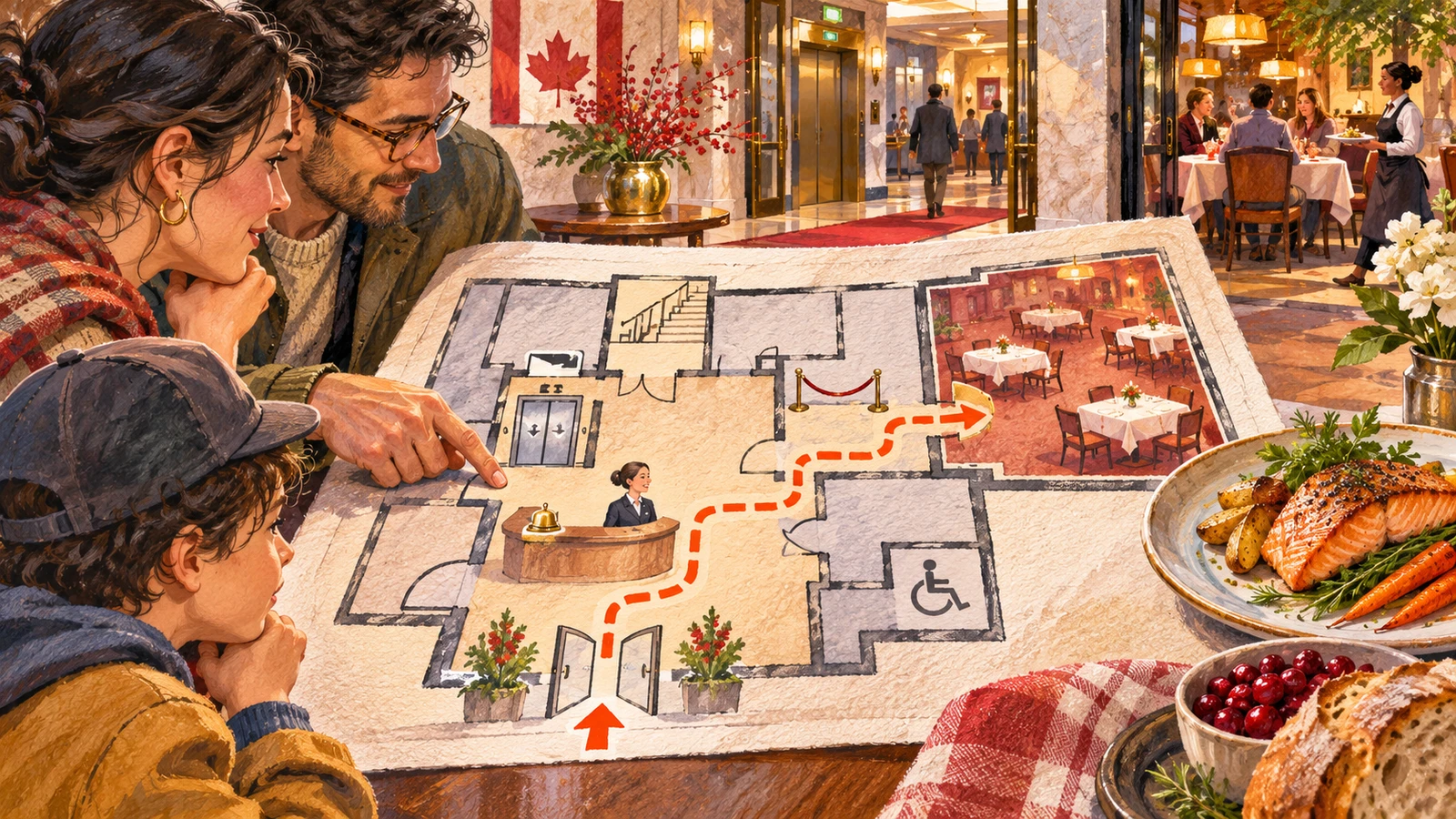
On a building plan the restaurant sits just behind the main hall. The map suggests a short walk, but the internal door may only serve events. Trace the route as a visitor. Look for the entrance described in your reservation before relying on a line between two rooms.
Follow the public route from the door
| Element | What it can show | What to check |
|---|---|---|
| Street entrance | Public route to the restaurant | When the door is open |
| Lobby passage | Connection to the event area | Whether diners may use it |
| Lift and landing | Possible move between levels | Service status and route beyond it |
In our imagined venue, daytime diners enter off the street. On an event evening, the plan also marks a staffed path from the lobby. The venue’s live access instructions tell you which one applies at your table time.
Read the symbols for floor changes, elevators, doors and screening points. A room label tells you where the table is. It does not always show whether you need a ticket or whom to ask for access.
If your route needs to be step-free, ask the restaurant about the whole approach from the drop-off, not just the availability of one elevator. Confirm any thresholds or gates important for your visit.
Write a short direction for the group with the door name, floor, and reception point. Date the route so a temporary event plan does not become a general recommendation.
Confirm what the plan leaves out
- Trace an allowed path
- Start at the named door.
- Identify elevator, stairs and reception on the plan.
- Verify the date and time
- Ask which access route is in use.
- Give guests the confirmed direction.
Questions and answers
- Does a line between rooms imply public access?
- Read the entry conditions and ask the venue if the connection is unclear.
- What if the plan is undated?
- Use it for orientation and confirm the current route before visiting.
- Should I give the same direction to event guests and street arrivals?
- Use the route that applies to each arrival point and check where the paths meet.